Japan Airlines is set to launch a two year experiment this May, deploying a team of AI powered humanoid robots to manage ground operations at Tokyo Haneda Airport (HND).
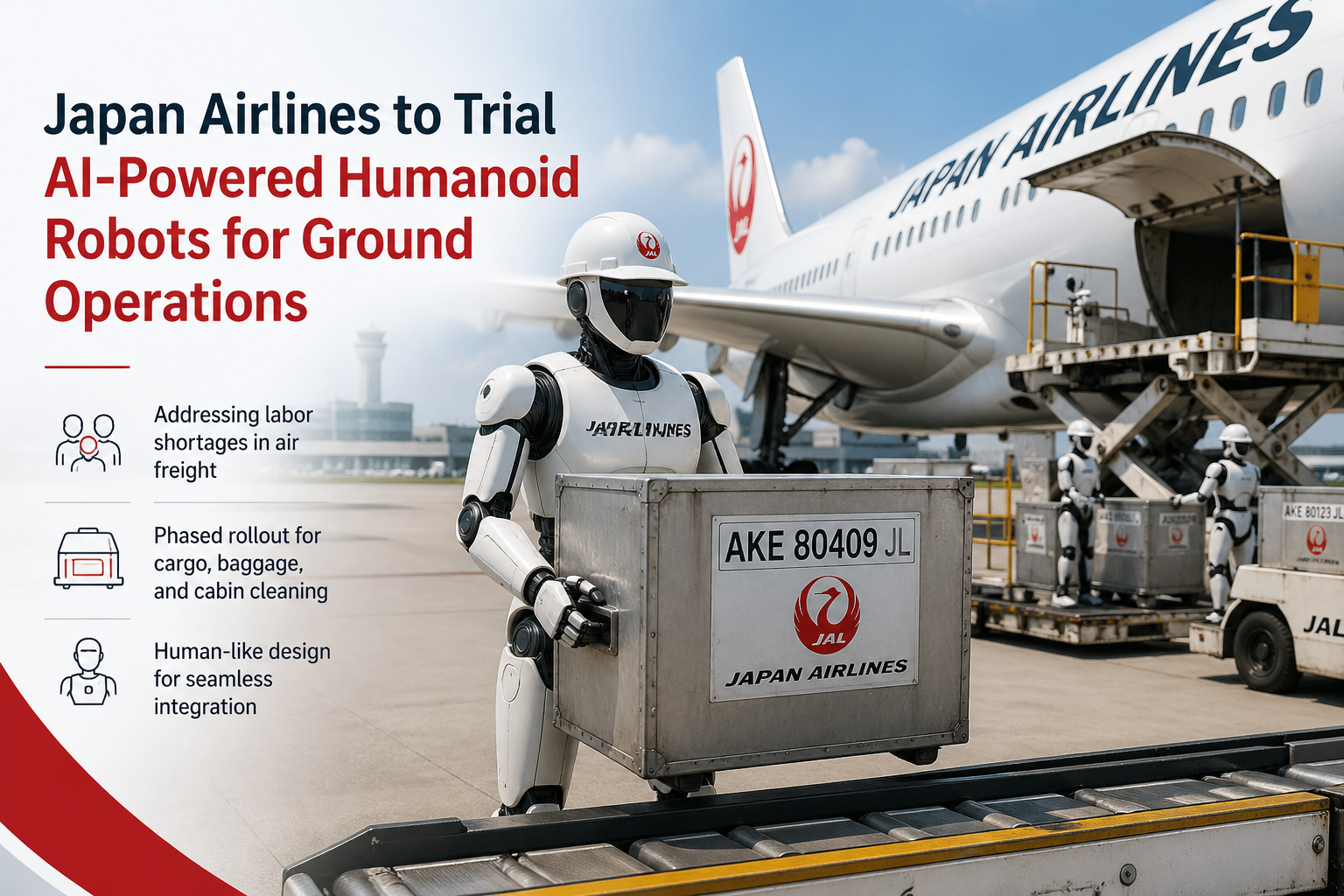
This initiative marks a first of its kind trial in Japan, aimed at addressing critical labor shortages in the aviation and air freight sectors.
Tackling Labor Shortages in Air Freight
The ongoing deficit of ground handling staff is particularly severe in Japan, driven by an aging workforce and a massive surge in inbound tourism. To maintain efficient cargo flows and steady turnaround times, Japan Airlines is testing this robotic crew as a practical operational solution for the tarmac.
Phased Rollout for Cargo and Baggage
The trial will be rolled out in strategic phases. Initially, the mechanical crew members will be tasked exclusively with loading and unloading cargo containers. As the experiment progresses, the airline plans to expand their duties to include handling passenger luggage and performing routine aircraft cabin cleaning.
Before hitting the front lines at Tokyo Haneda, the project will begin by analyzing safe operating zones on the tarmac. The robots will then undergo rigorous training in a simulated airport environment. The broader experiment is scheduled to run at major domestic airports across Japan until 2028.
ALSO READ:Firestorm Labs Secures $82M for Portable Military Drone Factories
The Advantage of Humanoid Design
Specially designed and programmed by GMO AI & Robotics, these robots possess a range of motion and adaptability comparable to human workers. Japan Airlines noted that the humanoid shape is a distinct operational advantage, as it allows the robots to be integrated seamlessly without requiring any significant modifications to existing airport infrastructure or aircraft cargo holds.