SpaceX flies its most used Falcon 9 booster for the 36th time this morning, a fresh reuse record, carrying 29 Starlink satellites toward low Earth orbit from Cape Canaveral.
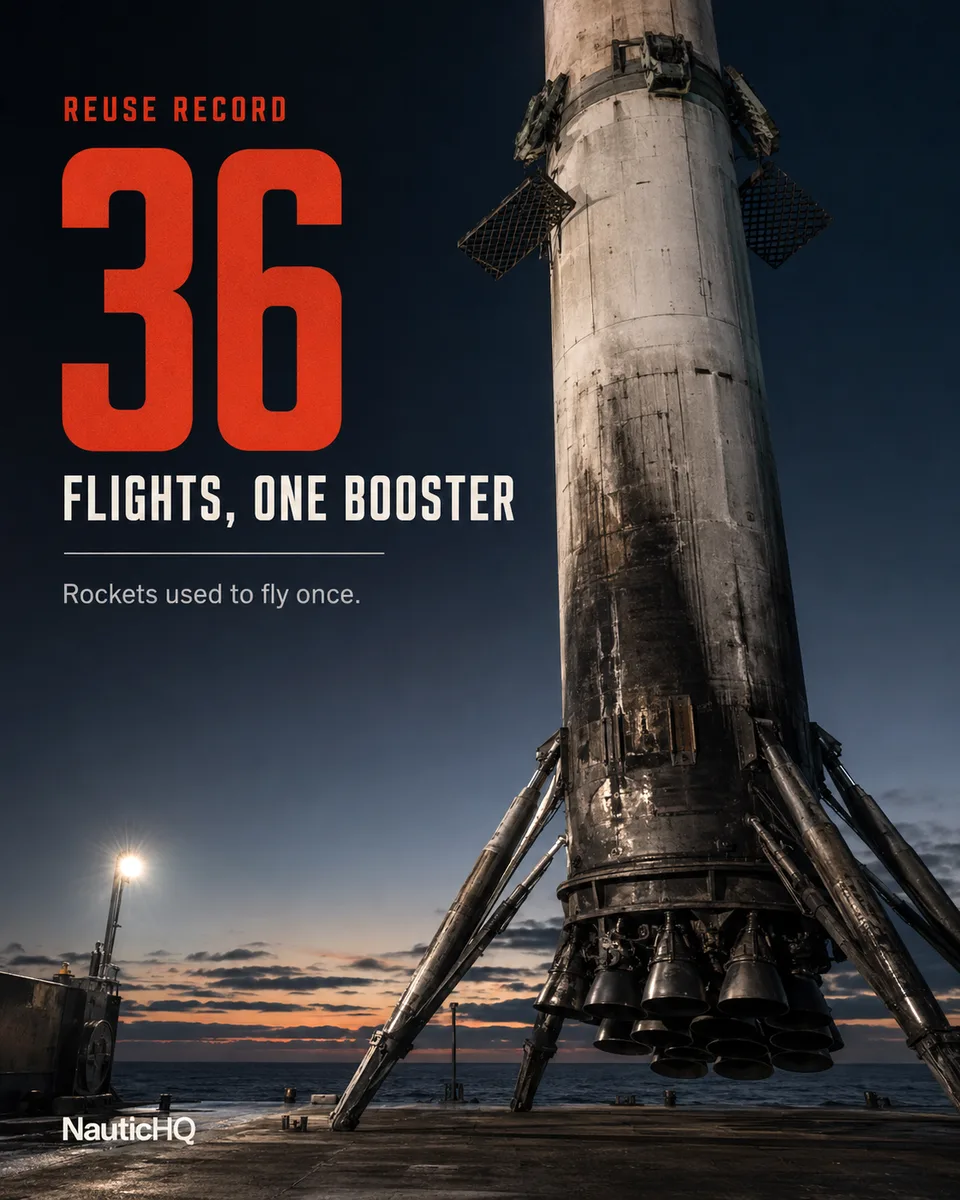
The core is B1067, in service since June 2021. Every flight it makes resets the number painted on its side. That number, not the payload, is what makes this launch worth watching.
B1067 has carried astronauts, cargo, and two dozen Starlink batches
B1067 began its working life on SpaceX's 22nd Dragon mission, a cargo run under the Commercial Resupply Services 2 contract with NASA. Then Crew-3. Then Crew-4, both carrying people. Then 24 separate batches of Starlink satellites.
The same physical airframe has flown NASA astronauts and the company's own broadband constellation. That is a résumé no expendable rocket ever built.
The mission profile runs Complex 40 to a drone-ship recovery
Liftoff is set for 5:25 a.m. EDT (0925 UTC) from Space Launch Complex 40 at Cape Canaveral Space Force Station, on a north-easterly track. The payload is Starlink 10-42: 29 more satellites for a constellation that already numbers more than 10,700 in orbit.
About eight minutes after launch, B1067 aims for the drone ship 'A Shortfall of Gravitas', waiting in the Atlantic. A clean landing would be the vessel's 160th catch and SpaceX's 635th booster recovery overall.
ALSO READ:SpaceX flies SiriusXM's most powerful satellite to orbit
Weather is 90 percent go, with one cloud to watch
The 45th Weather Squadron put the odds of favorable conditions at 90 percent. The one flag is the Cumulus Cloud Rule: light south westerly winds and a few offshore Atlantic showers could push a cumulus buildup over the pad. The backup day looks much the same, with Saharan dust settling into the mid-levels and suppressing cloud growth.
(Saharan dust as a launch ally is one of the stranger lines in a weather brief, and it is a real one.)
Why the number on the side of the rocket is the whole point
A booster is the expensive part of a launch. Build it once, fly it once, and the full manufacturing cost lands on a single mission. Build it once and fly it 36 times, and that cost spreads across 36 flights while what you pay per launch drifts toward propellant, inspection, and refurbishment. That is the entire economic case for reuse, and B1067 is the clearest physical proof of it flying today.
For the satellite operators and insurers who price launch risk, the interesting question is no longer whether a flown booster is safe. It is how many flights the data will support before the curve bends.
SpaceX landed its first booster in December 2015, and for years the achievement was that the rocket came back at all. Now the milestone is arithmetic. The company has raised the certified flight ceiling on these cores again and again, always trailing the fleet leader by a few missions, and B1067 is the fleet leader. Expect the record to keep moving in single flight increments, because the marginal cost of flying a proven core one more time sits far below the cost of building a new one. The rocket stops flying when the inspection data says stop. Not before.