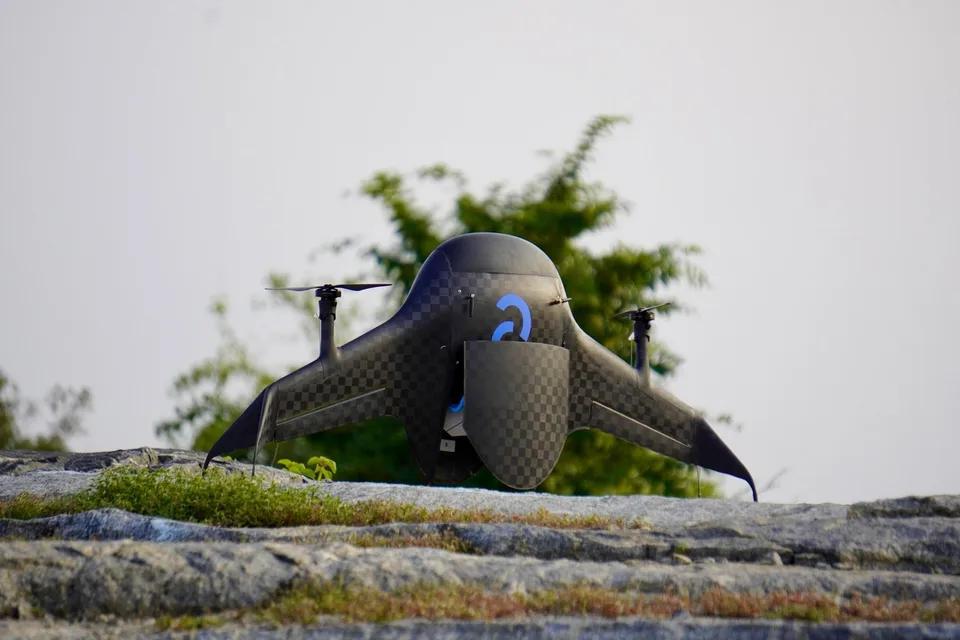
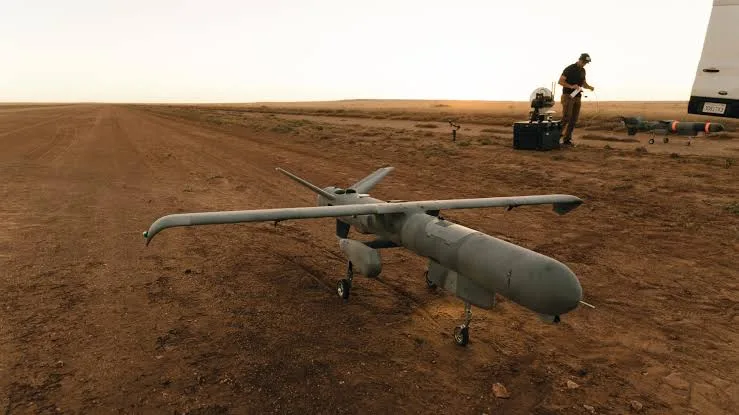
Quantum Cyber has introduced the PHANTOM-950 UAS, a long-range autonomous platform the Nasdaq-listed defence company is designing for up to 950 kilometers of range, an 18,000-meter ceiling, and a 10-kilogram modular payload.
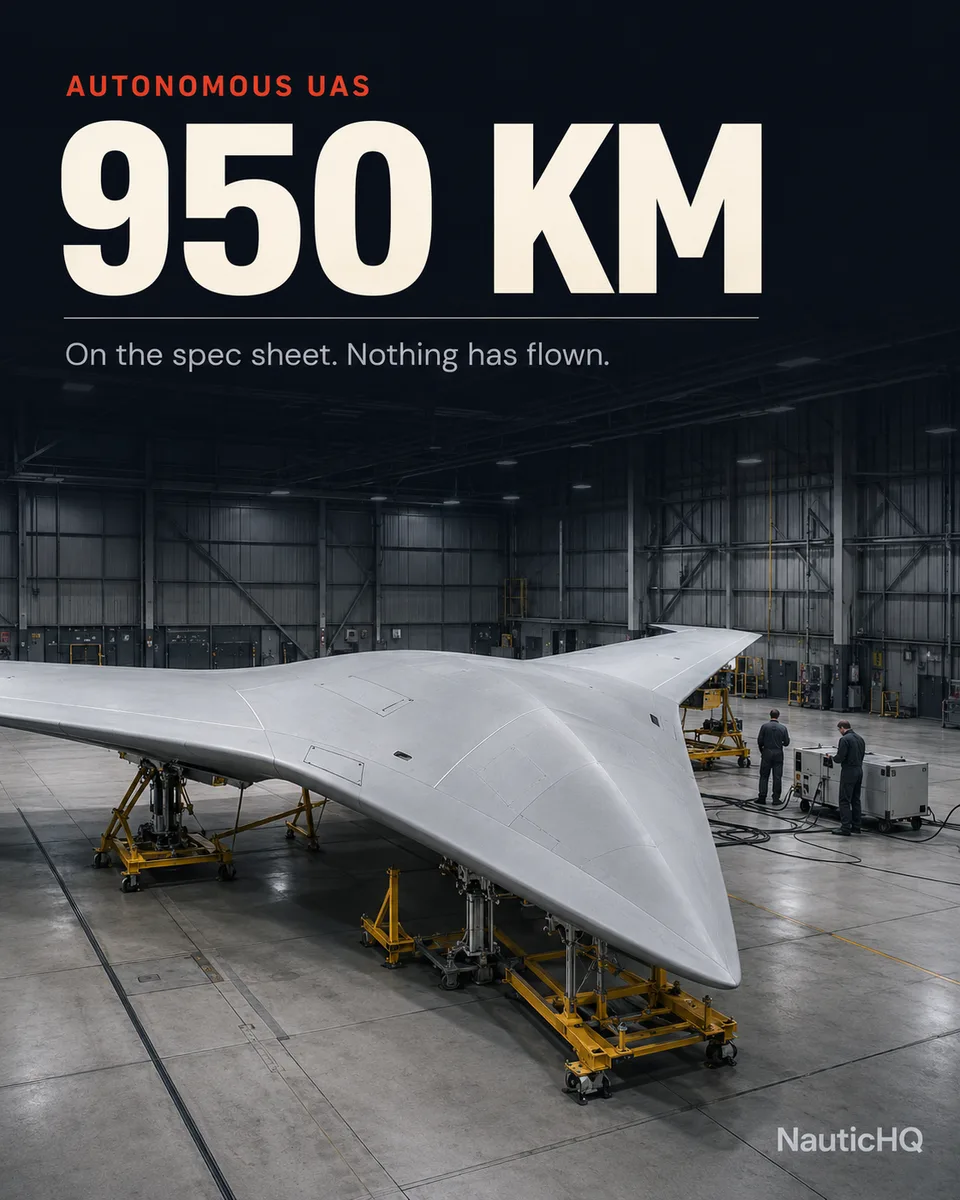
The aircraft is meant to sit at the top of Quantum Cyber's autonomous-systems portfolio, part of the AI driven System of Systems it is assembling for drone warfare, counter-drone work, and border security. Every figure released so far carries the same qualifier: designed for, targeted at, intended to.
The PHANTOM-950 UAS is a specification, not a demonstrator
Quantum Cyber has published a set of design targets, not the results of a flight test. The company describes a platform being designed for up to 950 kilometers depending on configuration, an operating altitude of up to 18,000 meters, a 10-kilogram payload, autonomous navigation with precision landing, and a choice between reusable and one-way configurations. It calls these internal design specifications. None has been demonstrated by an aircraft in the air.
That distinction is the whole story for anyone deciding whether to care. A design specification commits nothing to physics. Range, ceiling and payload on a slide are targets the airframe has to earn in flight test, and each one trades against the others. More payload buys less range. More range costs altitude. Until something flies with instruments bolted to it, 950 kilometers is an aspiration, not a measurement.
The airframe points to a small, high-flying platform
The PHANTOM-950 is built around a blended-wing airframe and a multi-stage propulsion system meant to handle launch, cruise and terminal flight as separate phases. Quantum Cyber sells the modular payload bay as the point of the design: logistics, communications relay, intelligence and surveillance, environmental monitoring, humanitarian assistance, and customer-specific fits.
But the envelope describes itself. A platform that can be set up for a one-way mission and carry 10 kilograms several hundred kilometers is describing a capability the defence market already has a name for, whatever the payload list leads with. The humanitarian and logistics framing is real. So is the electronic-warfare line in the same announcement, and the one-way option sitting next to it.
ALSO READ:Gulfstream G800 Flies 8,303 nm,fastest business flight
The factory comes after the announcement
Quantum Cyber intends to build the PHANTOM-950 at its own domestic plant, once it finishes acquiring the manufacturing site and standing up production. The plant is not running yet. The introduction lands alongside the company's other recent moves: the Quantum Station command-and-control platform, work on proprietary propulsion, and a wider push to expand US manufacturing.
CEO David Lazar frames the aircraft as the next piece of a modular portfolio aimed at government and commercial buyers, built on the American production base the company is still assembling. The base, like the aircraft, is a work in progress.
What a program at this stage tells a buyer
The PHANTOM-950 is a statement of intent, not an option on a menu. There is no unit price, no delivery slot, no flight-test date, no named customer, and no operating factory. What exists is a coherent design and a company willing to fund it toward a first flight. That is worth watching, not procuring.
Aerospace is full of confident renderings that never became aircraft. The ones that make the crossing do it by clearing a short list of unglamorous milestones in order: a prototype, a first flight, a test campaign, a launch customer. PHANTOM-950 has cleared the first, a design, and none of the rest.
The next real signal will not be another specification. Watch for two things, in this order: confirmation that the manufacturing site is finished and producing, then a first flight with published performance numbers. A named government or commercial customer before either would be the genuine surprise. Until the plant exists and the airframe flies, the PHANTOM-950 is exactly what Quantum Cyber calls it a platform being developed, held together for now by the conditional tense.